
September 18, 2026

What Are Manifestation Techniques?
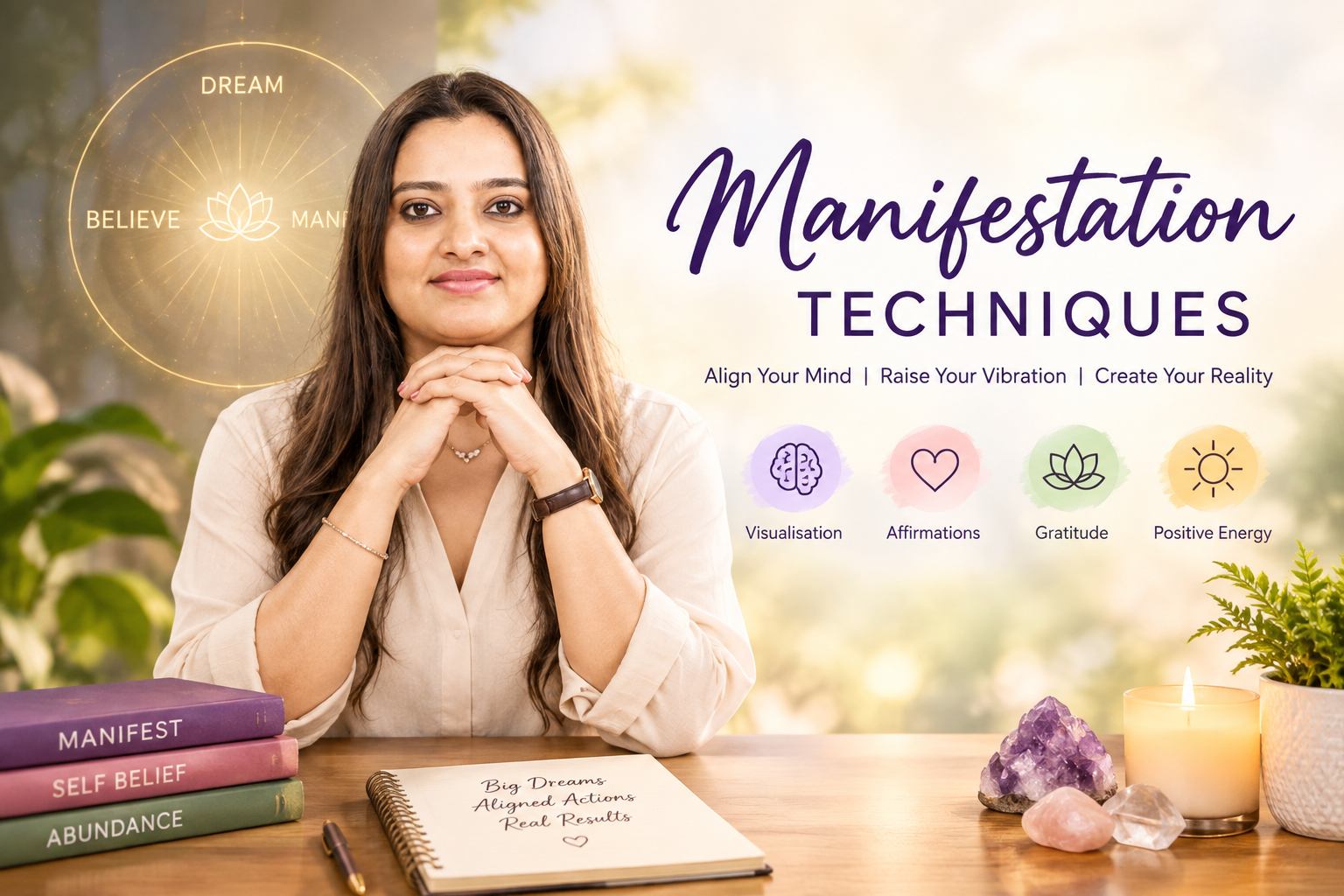
Manifestation techniques are structured practices people use to focus their attention on a desired outcome and become more intentional about their thoughts, emotions, beliefs and actions.Different people approach manifestation differently. Some use spiritual practices, while others use it primarily as a mindset and goal-setting exercise.A balanced manifestation practice can involve:Defining what you genuinely wantVisualising a desired futureWriting down intentionsPractising gratitudeIdentifying limiting beliefsCreating supportive affirmationsRecognising obstaclesTaking consistent actionReviewing progressAdjusting goals when circumstances changeThe important point is that intention should eventually connect with behaviour.Research on goal pursuit has also examined techniques such as implementation intentions—specific “if-then” plans that connect situations with planned actions.
10 Manifestation Techniques You Can Practise
1. Set a Clear Intention
The first step is knowing what you actually want.Instead of writing:“I want a better life.”Try making your intention more specific:“I want to build a career that gives me meaningful work, financial stability and opportunities to grow.”A clear intention gives your mind something concrete to focus on.Consider asking yourself:What exactly do I want?Why is it important to me?How would achieving it change my daily life?Is this goal genuinely mine?What part of this goal is within my control?Specific goals are generally easier to monitor than vague ones, and psychological research on goal setting has highlighted the usefulness of specific goals and regular feedback.
2. Practise Visualisation
Visualisation involves mentally imagining a desired situation.Find a quiet space and picture yourself experiencing the outcome you are working towards.For example, if your goal is professional growth, you might imagine:Entering your workplace with confidenceCompleting an important projectDeveloping a new skillCommunicating clearlyCelebrating a meaningful milestoneTry to make the visualisation detailed rather than simply imagining a vague picture of success.However, visualisation should not replace planning. Thinking about the desired future becomes more useful when you also consider what needs to happen between your current situation and that future.
3. Use Affirmations Thoughtfully
Affirmations are short statements that reinforce an intentional mindset.Examples include:“I am willing to take consistent steps towards my goals.”“I trust myself to learn and adapt.”“I am open to new possibilities.”“I can take purposeful action even when I feel uncertain.”Rather than using affirmations as promises that something external must happen, use them to reinforce behaviours, attitudes and values that are within your control.For example, instead of:“I will definitely become successful.”Try:“I am committed to learning, taking action and improving consistently.”The second statement creates a connection between mindset and behaviour.
4. Try Scripting or Wish Writing
Scripting involves writing about your desired future as a way of clarifying your intentions.You might write about:What you wantHow you would like to feelWhat kind of environment you wantWhat values are important to youWhat actions you are prepared to takeKeep the exercise realistic and personal.A simple prompt is:“If I were living closer to the life I want, what would my day look like?”Manifest with a Star specifically includes intentional wish writing among its manifestation practices.
5. Build a Gratitude Practice
Gratitude is another commonly used manifestation practice.Instead of focusing exclusively on what you do not have, spend a few minutes identifying things you currently appreciate.You could write down three things such as:A supportive relationshipAn opportunity you currently haveA personal quality you valueGratitude does not mean ignoring difficulties. It can simply help you notice what is already meaningful while you continue working towards future goals.
6. Identify and Challenge Limiting Beliefs
Sometimes the biggest obstacle is not the goal itself but a belief about what is possible.Common examples include:“I am not capable enough.”“People like me cannot achieve that.”“I always fail.”“It is too late for me.”“I have to be perfect before I start.”When you notice one, ask:“What evidence supports this belief, and what evidence challenges it?”Then create a more balanced alternative.For example:Old belief: “I am not good at starting new things.”Balanced belief: “Starting something new is uncomfortable for me, but I can learn through practice.”This approach focuses on developing a more constructive relationship with your thoughts rather than pretending negative experiences do not exist.
7. Create an Inspired-Action List
One of the most useful ways to make manifestation practical is to translate your intention into actions.Suppose your intention is:“I want to grow my career.”Your action list might include:Update your CVLearn a relevant skillContact one professionalApply for suitable opportunitiesPractise an interviewReview your progress every SundayThis is where manifestation becomes connected to everyday behaviour.Manifest with a Star describes its approach using the progression of believe, align and manifest, with aligned action included as an important part of the process.
8. Use the “If-Then” Planning Technique
An intention becomes easier to follow when you decide in advance what you will do in a particular situation.For example:“If I feel too tired to work on my goal, then I will spend at least 10 minutes doing the smallest useful task.”Or:“If I become distracted while working towards my goal, then I will put my phone away and continue for another 20 minutes.”This type of planning is known as an implementation intention. Research has investigated how if-then plans can support self-regulation and goal-directed behaviour.
9. Practise Meditation and Mindful Reflection
Meditation can create quiet time for observing your thoughts and reconnecting with your intentions.A simple routine could involve:Sitting comfortably.Taking several slow breaths.Noticing your current thoughts.Bringing your attention back to your intention.Visualising one meaningful goal.Identifying one action you can take today.The purpose is not to force a particular outcome. Instead, it creates a moment to pause, reflect and approach your goals more consciously.Meditation and wish writing are among the practices offered through Manifest with a Star's current programme.
10. Review Your Progress Regularly
Manifestation should not be a one-time activity.Set aside time each week to ask:What progress did I make?What worked?What did not work?What obstacle appeared?What did I learn?What should I change next week?You may discover that your original goal needs to change. That is not necessarily failure. Goals can become clearer as you gain experience.A useful framework is Wish → Outcome → Obstacle → Plan. This resembles the WOOP approach, a goal strategy based on mental contrasting and implementation intentions.
A Simple Daily Manifestation Routine
If you are new to manifestation, you do not need a complicated routine.Try this 10–15 minute practice:Morning2 minutes: Write one intention for the day.3 minutes: Visualise yourself taking a meaningful step towards it.2 minutes: Repeat a realistic affirmation.3 minutes: Write one action you can complete today.2 minutes: Express gratitude for something already present in your life.The goal is consistency, not perfection.
Common Mistakes to Avoid
Believing thoughts alone guarantee results
Manifestation should not be treated as a guarantee that thinking about something will make it happen.External circumstances, other people's decisions and unexpected events can influence outcomes.
Setting vague goals
“Something good will happen” is difficult to act upon.A clearer intention gives you something to work towards.
Only visualising the result
Imagine not only the destination but also the process.Ask yourself what actions, skills and decisions may be required.
Ignoring obstacles
A practical manifestation routine should make space for setbacks.Consider what could get in the way and decide beforehand how you might respond.
Blaming yourself when something does not happen
Not achieving an intended outcome does not automatically mean you lacked belief or practised incorrectly.Review the situation objectively and consider what was and was not within your control
Practical Tips for More Consistent Manifestation
To make your practice sustainable:Keep your intention visible.Choose one or two techniques rather than doing everything at once.Connect every major intention with an actionable step.Review your goals weekly.Use realistic affirmations.Track progress rather than waiting for a dramatic result.Be open to adjusting your goal.Give yourself time to develop new habits.Focus on what you can influence.The aim is to create clarity, self-awareness and purposeful action, rather than pressure yourself to produce a particular outcome.
Who Can Benefit From Manifestation Practices?
Manifestation practices may appeal to people who want to:Clarify personal goalsDevelop a more intentional routineExplore their beliefsPractise visualisationBuild a gratitude habitReflect on personal prioritiesCreate more structure around their intentionsCombine spiritual practices with practical actionThey are not a replacement for professional medical, psychological, financial or legal advice when those forms of support are needed.
When Should You Consider Professional Guidance?
You may benefit from structured guidance if you:Feel unclear about what you actually wantStruggle to maintain consistent practicesKeep encountering the same limiting beliefsWant personalised support with your intentionsNeed help creating a practical routinePrefer learning through guided exercisesManifest with a Star currently offers both a 5-day online workshop and 1-on-1 consultation focused on manifestation practices, goals, limiting beliefs and aligned actions.